 HybridPPM.com
PMO governance software that works the same way for every method
HybridPPM gives a project management office (PMO) one set of controls across the whole portfolio. You get stage gates with named approvers, change control with reference numbers, version-controlled documents, standard registers and an audit log. They work whether a project runs on a Gantt schedule, in sprints or on a Kanban board, and teams don’t have to give up the way they work.
Criteria, approvers and a Go / Hold / Stop decision at each gate.
Change requests with reference numbers, impact and links to the work.
Every document version and every change, with who made it and why.
Reviewed by Mike Berry
Stage gates that decide funding and direction
Governance starts with deciding which work goes ahead and when it moves on. In HybridPPM, proposals come in as Project Requests and are scored against weighted criteria. Approved work then passes through gates where named approvers make a recorded decision.
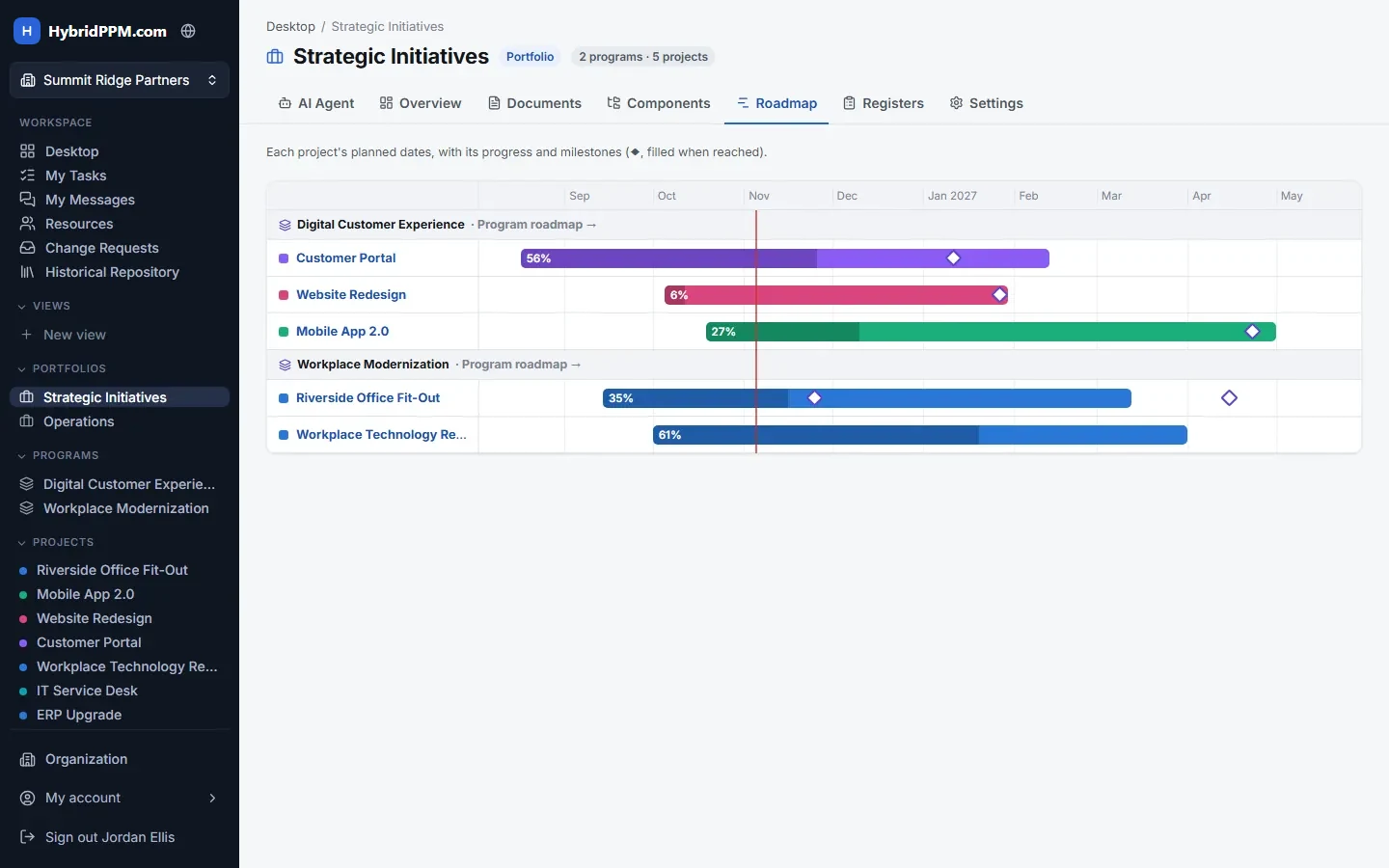
Gates
- A gate at each process group, or at WBS phases for multi-phase projects.
- Criteria for each gate, so everyone knows what “ready” means before the review.
- Named approvers and a Go / Hold / Stop decision, kept with the project.
Intake and authorization
- Project Requests from inside the organization, or through a public intake portal.
- Scoring against criteria such as strategic fit, value, cost, risk and urgency.
- Once a request is approved, a project charter drafted from a template authorizes the work.
Change control and registers on every project
Most problems a PMO has to explain later began as an unrecorded change or a risk nobody owned. HybridPPM puts the same change process and registers on every project, so they can be compared and rolled up.
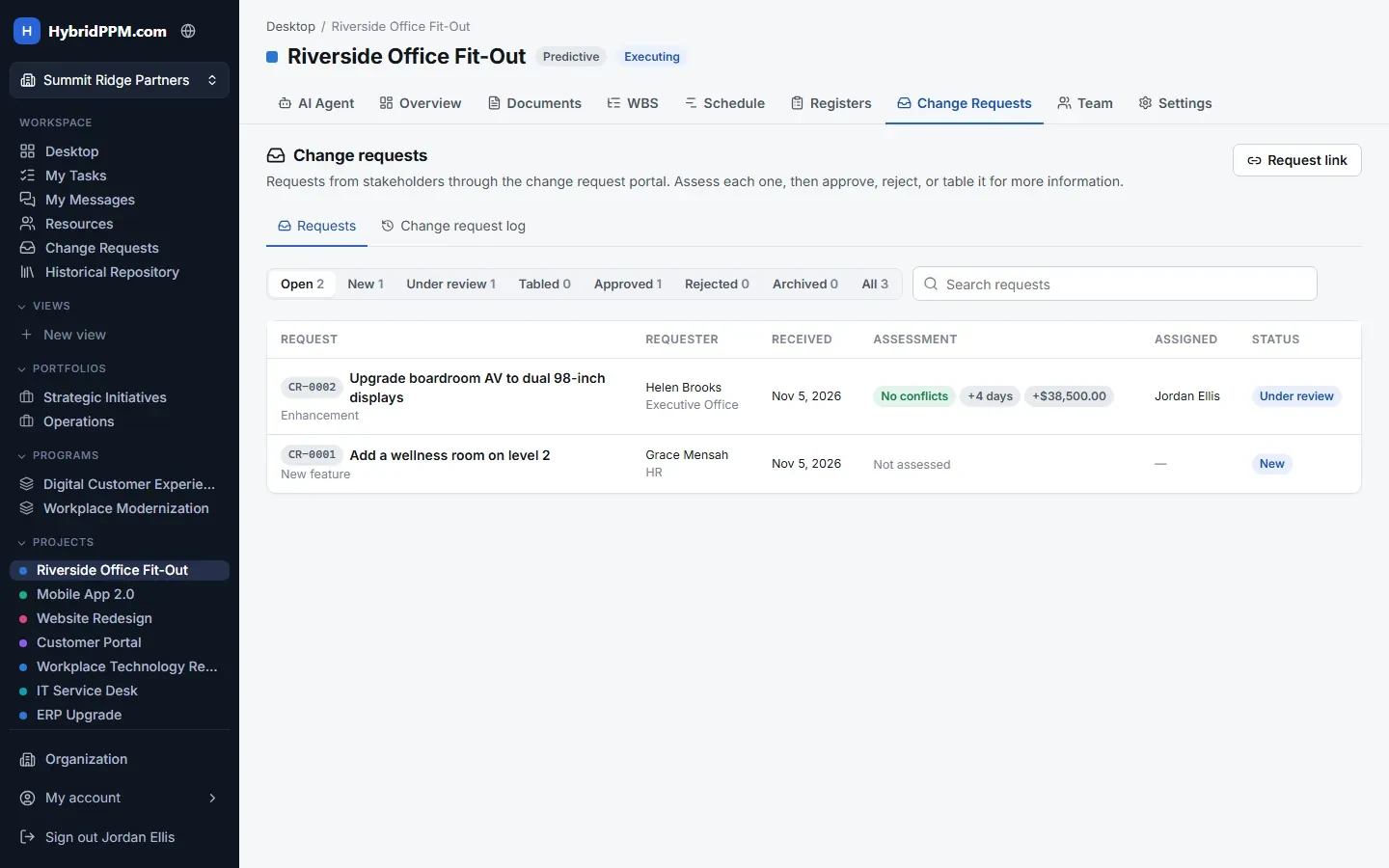
Change control
Every change request gets a reference number and a record of its impact. It links to the work it affects, so any decision can be traced back to the request behind it.
Registers
- Risk, issue and stakeholder registers on every project.
- Risks roll up to programs and portfolios, so leaders see where exposure is building.
- Procurement with a vendor register, contracts, and purchase orders that need approval.
Document control without a separate document system
Governance depends on everyone working from the same version of the charter, the plan and the scope. HybridPPM keeps project documents next to the project and keeps every version.
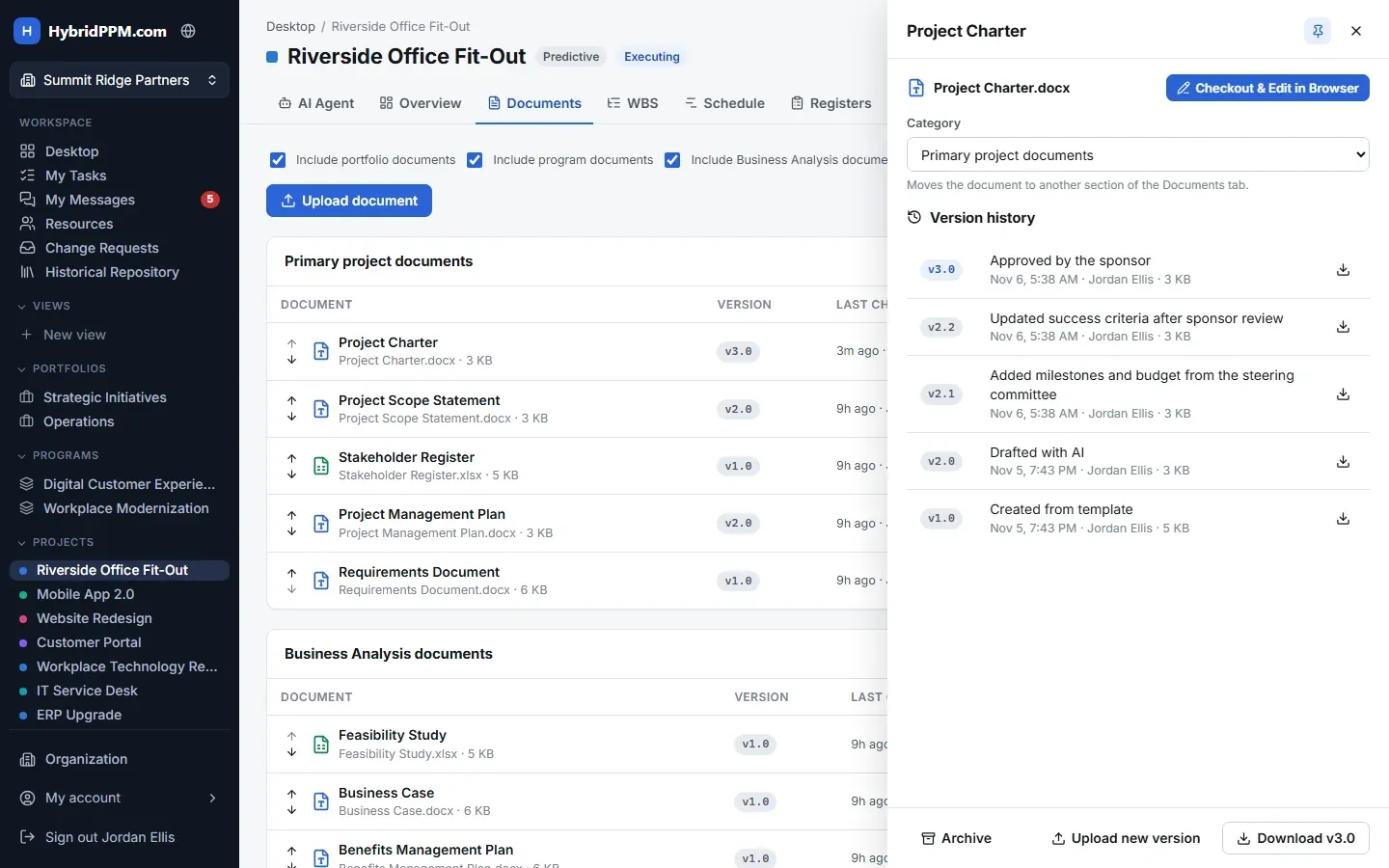
Version control
- Word documents edited in the browser, with every version kept.
- Each version records who changed it and why.
- Document sections, folders, templates and links, so every project files things the same way.
Standard documents
Charters, management plans and scope statements start from templates, and the process groups, registers and earned value follow PMI practice. A project can follow the standard without the team building it from scratch.
Oversight and audit across the portfolio
Controls only help if the PMO can see whether they are being followed. HybridPPM rolls project data up live and keeps a record of what changed.
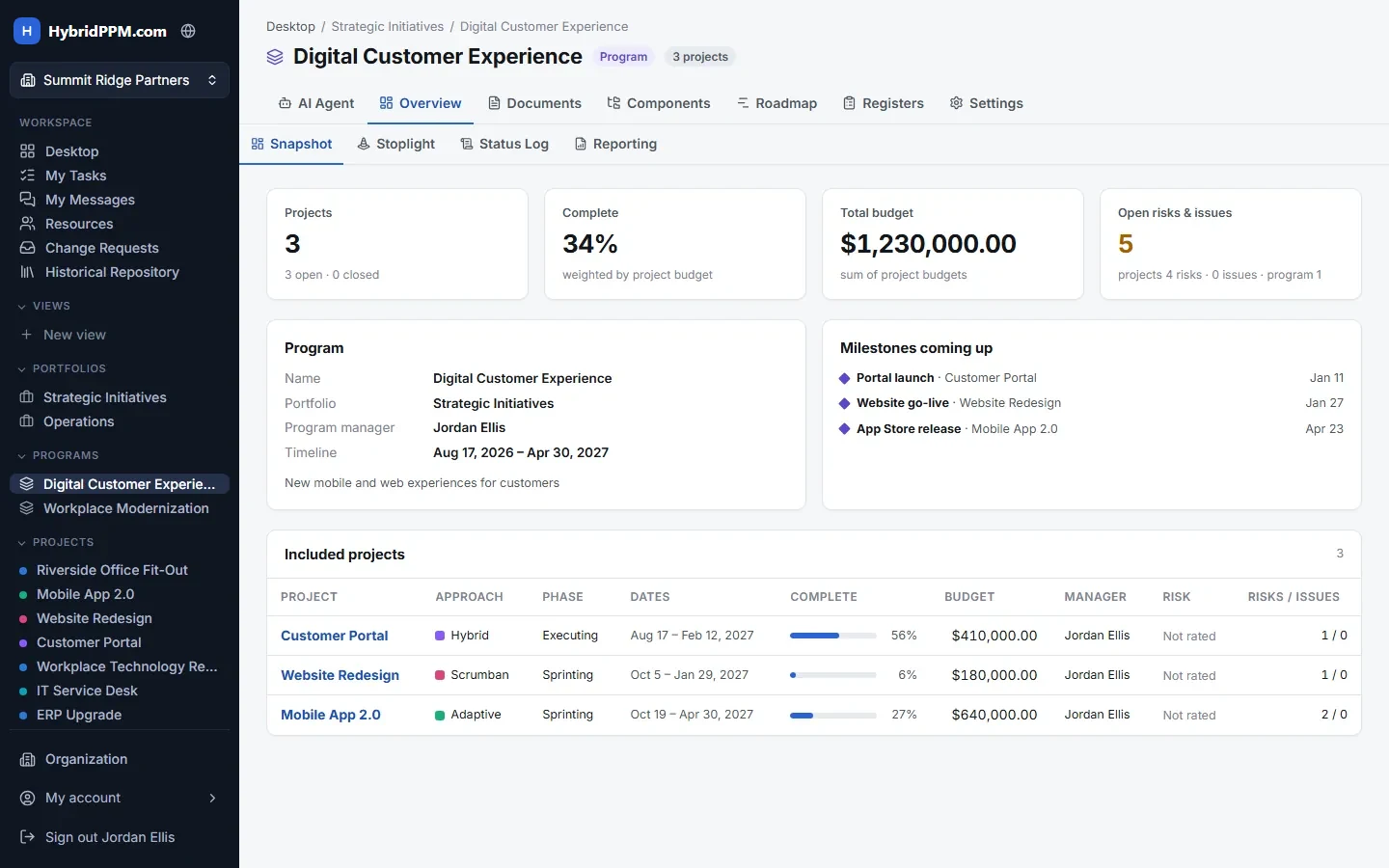
Live roll-ups
Progress, budget, earned value and risk roll up from every project to its programs and portfolios, whatever method each project uses.
Audit and approvals
- An organization-wide audit log of who changed what and when, with CSV export.
- Weekly timesheets with approval, and a resource heat map that shows who is over-allocated.
- Deleted projects can be recovered.
Lessons that carry forward
A historical repository keeps lessons learned and estimates against actuals, so the next plan starts from evidence.
Governance without slowing teams down
- Each project chooses plan-based, Agile, Kanban, Scrumban or hybrid. The PMO’s gates, registers and change control apply to all of them.
- Reports build and send themselves, and live portals let sponsors and customers see progress without signing in.
- Single sign-on with Microsoft Entra ID, Okta or Google Workspace, and SCIM provisioning.
- Personal information and files are encrypted with a data key unique to your organization.
Questions, answered
What is PMO governance software?
PMO governance software helps a project management office apply the same decision points, controls and records across every project it oversees. That covers gates and approvals, change control, risk and issue registers, document control and an audit trail, with roll-ups that show leaders whether the work is on track.
How do you govern Agile and plan-based projects together?
Govern the decisions, not the method. In HybridPPM every project, whether it runs on a schedule, in sprints or on a board, uses the same gates, change control, registers and documents. Its progress, budget, earned value and risk roll up to the same programs and portfolios.
What happens at a stage gate in HybridPPM?
Each gate has criteria and named approvers. The approvers review the project against the criteria and record a Go, Hold or Stop decision, which stays with the project. Gates can sit at each process group, or at WBS phases for multi-phase projects.
Does HybridPPM keep an audit trail?
Yes. An organization-wide audit log records who changed what and when across every project, and can be exported to CSV. Every document version is kept with who changed it and why, and change requests carry reference numbers.
Will governance slow our teams down?
It doesn’t have to. Teams keep the board, backlog or schedule that suits their work. The PMO’s controls sit at the points where decisions are made, and reporting comes from the project data instead of extra status spreadsheets.
Reviewed by Mike Berry. HybridPPM follows the PMI standards behind the PMP, PgMP, PfMP, PMI-PBA and PMI-ACP certifications. PMI, PMP, PgMP, PfMP, PMI-PBA and PMI-ACP are registered marks of the Project Management Institute, Inc. Screenshots show a fictional demo organization.